
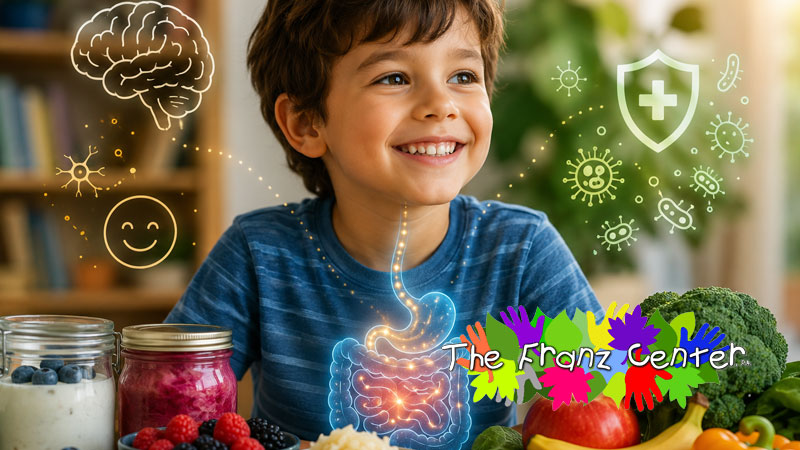
Your child’s gut does far more than digest food. It shapes their immune system, influences their mood, and affects how they think, feel, and grow. When the gut is healthy, children tend to thrive. When it is out of balance, the effects can show up in surprising ways.
At The Franz Center we look at the whole picture. Gut health is one of the most important and most overlooked parts of pediatric care.
The Gut Is Your Child’s Second Brain
The digestive system contains its own network of nerves called the enteric nervous system. Scientists often call it the “second brain.” It communicates directly with the brain through the gut-brain axis, a two-way signaling system that connects digestion with emotion and behavior.
About 90% of the body’s serotonin, a neurotransmitter that regulates mood, sleep, and appetite, is produced in the gut. This means what your child eats can directly affect how they feel and behave.
A landmark study published in Nature Communications found that early gut microbiome composition was linked to brain connectivity patterns tied to anxiety and depression in children as young as 7 to 8 years old. Supporting gut health early in life may have lasting effects on emotional wellbeing.
Gut Health and the Immune System
The gut houses up to 70 to 80 percent of the body’s immune cells. A balanced microbiome helps those immune cells function properly. It teaches the immune system what to fight and what to leave alone.
When the gut microbiome is disrupted, children become more vulnerable to frequent infections, allergies, and inflammatory conditions. According to Banner Health, common signs of a compromised gut include recurring stomach aches, persistent eczema, frequent colds, and unexplained mood changes.
For more on building strong immunity naturally, read our blog on Boosting Immunity the Natural Way: Herbs, Nutrition, and Pediatric Wellness.
What Disrupts the Gut Microbiome in Kids?
Several common factors throw off a child’s gut balance. Being aware of them helps parents take proactive steps.
- Frequent antibiotic use without probiotic support
- Diets high in processed foods, sugar, and artificial additives
- Chronic stress or poor sleep
- Limited intake of fiber-rich fruits, vegetables, and whole grains
- Low exposure to diverse environments and outdoor play
Small changes in diet and daily habits can make a real difference over time.
How to Support Your Child’s Gut Health
Feed the microbiome with variety. Offer a range of colorful vegetables, fruits, legumes, and fermented foods like yogurt and kefir. Fiber feeds the beneficial bacteria that keep the gut lining strong.
Limit ultra-processed foods and sugary drinks. These disrupt the balance of gut bacteria and contribute to inflammation.
Protect sleep. The gut and the brain both restore during sleep. Consistent bedtime routines support both systems at once.
If your child struggles with mood, anxiety, or behavioral challenges alongside digestive symptoms, gut health may be part of the answer. Our blog on Natural Solutions for Managing Pediatric Anxiety and Stress explores the overlap between the two.
Partner With a Provider Who Understands the Gut-Body Connection
Gut health in children is complex and personal. A one-size-fits-all approach rarely works. At The Franz Center, we combine functional testing, nutritional guidance, and integrative care to support your child’s gut from the inside out.Ready to get started? Schedule a free consultation with our team today.